
My new album Earth Variations is out now. Finally, phew!
This Bandcamp release includes high quality download and additional artwork. The album will be available on all the other streaming services in early June (the exact release date to be confirmed).
Earth Variations is inspired by our unique, complex planet in a state of flux – a world that our escapist political and economic ideologies, against all the actual intelligence and knowledge, continue to regard as a resource to be exploited and exhausted rather than an opportunity to be nurtured and shared. (Or perhaps it’s no longer about ideologies and escapism but pure greed and indifference.)
Drawing from the notion of geophilosophy – “earth-thinking” originally conceived by Gilles Deleuze and Félix Guattari to consider the relation between thought and environment (concepts created through the relationship between territory and earth) – the album explores the idea of music as an embodied and possible geography: a milieu, landscape, terrain, situation, condition, atmosphere. In this sense, it follows the map initially drawn by artists such as Jon Hassell, Brian Eno, Bernard Parmegiani, Biosphere, Ben Frost and Björk (and many others, even those without the initial B) while adding its own, previously uncharted regions to it: musically it journeys in a less familiar territory between the habitats of contemporary classical, experimental electronic, world and possible musics – occasionally reaching a more elevated ground to gaze at these more familiar vistas on the horizon.
The album features contributions from soprano Viktoriia Vitrenko, bassist Omar Harb, Ginette player Petteri Mäkiniemi, guitarist Nazim Bakour, and sound artist Em’kal Eyongakpa. The music has been composed and recorded in various locations in London, Saarbrücken, Espoo, Douala and Paris between 2004 and 2023. The album has been mastered by Gregor Zemljic (Earresistible Mastering).
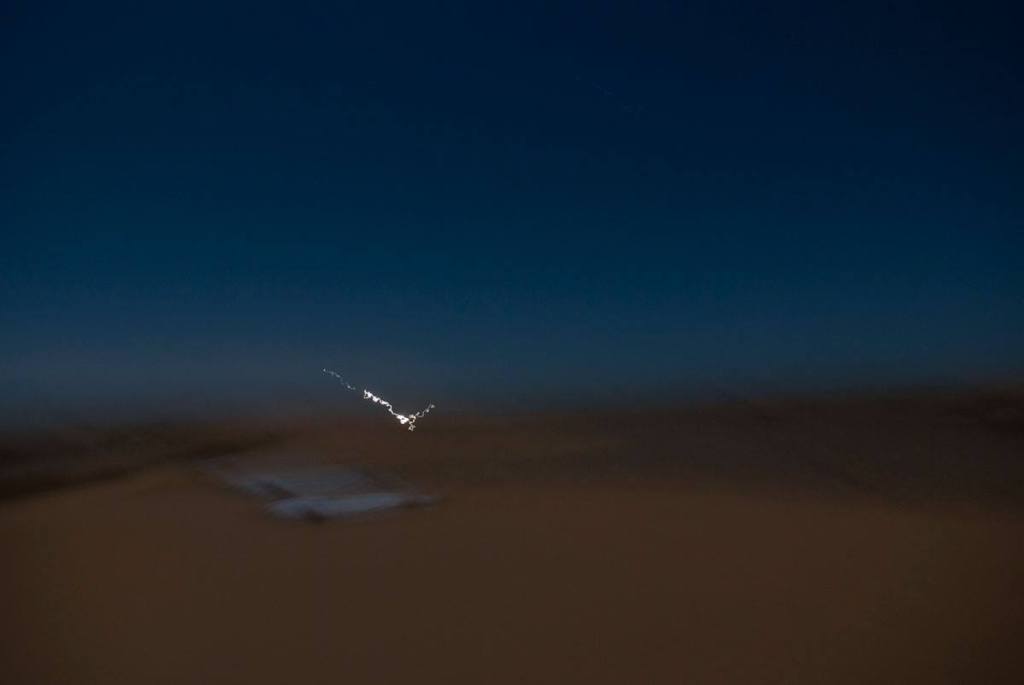
The cover art includes original photography by Lee Clough of the Wadi Rum desert, Jordan. Lee is the main culprit/catalyst in this story: it was her low quality cassette tape, which she’d recorded during a boat ride in the Ganges river near Varanasi in India and which she’d lent me back in London in early 2000, that first gave me the idea of music as a possible geography, landscape and place – or geography/landscape/place as a possible music. I became entranced by that tape and the world, possible and real, its sonic content and quality painted; I even failed my first year of Sonic Arts studies because I insisted on incorporating the tape into my compositions despite the clear instruction not to use any field recordings at that stage. I couldn’t resist: that early morning/late evening river atmosphere with people and cows passing, smoke from the riverbanks rising, gentle engines droning, birds and monkeys calling – everything punctuated by Lee’s joyful, sometimes perplexed, shrieks and comments – represented to me the very essence of life, of being alive in this world: no ideologies or escapism, simply being immersed in the landspace, embracing the world.
Fast-forward to 2015 and the European refugee crisis. Instigated by the geopolitical situation, Earth Variations started as an extensive sound art project about migration, conflicts and borders. However, since I was unable to secure funding for its realisation, the initial sketches gradually evolved into instrumental compositions of their own, still carrying those themes at their core but in more abstract forms.
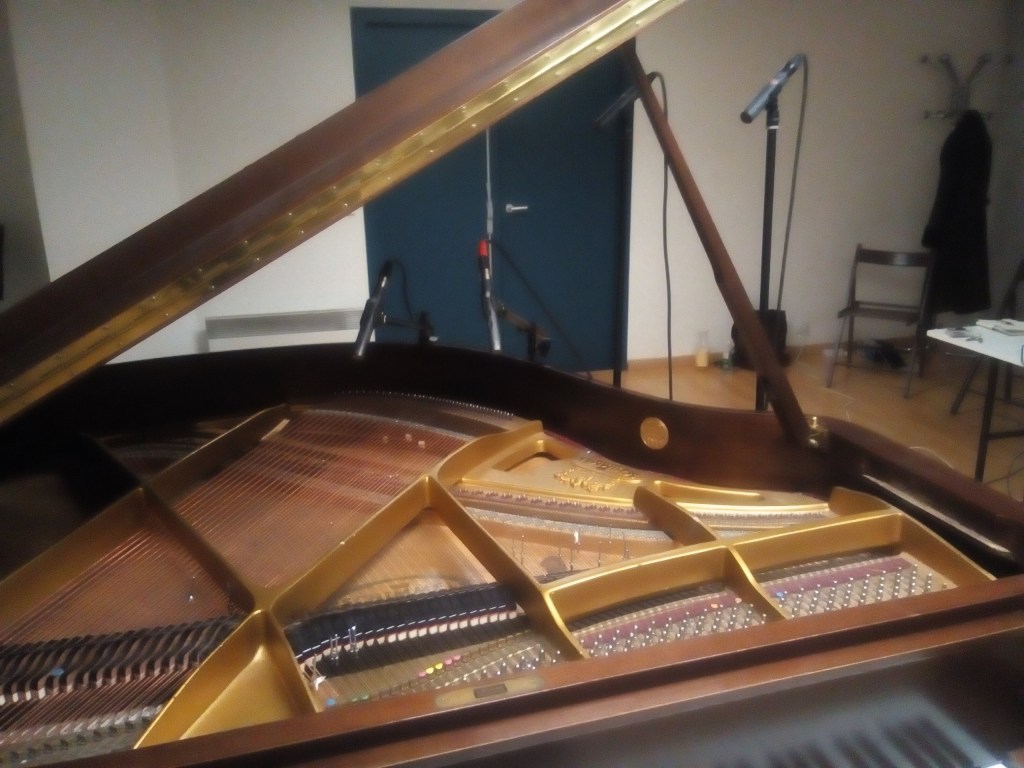
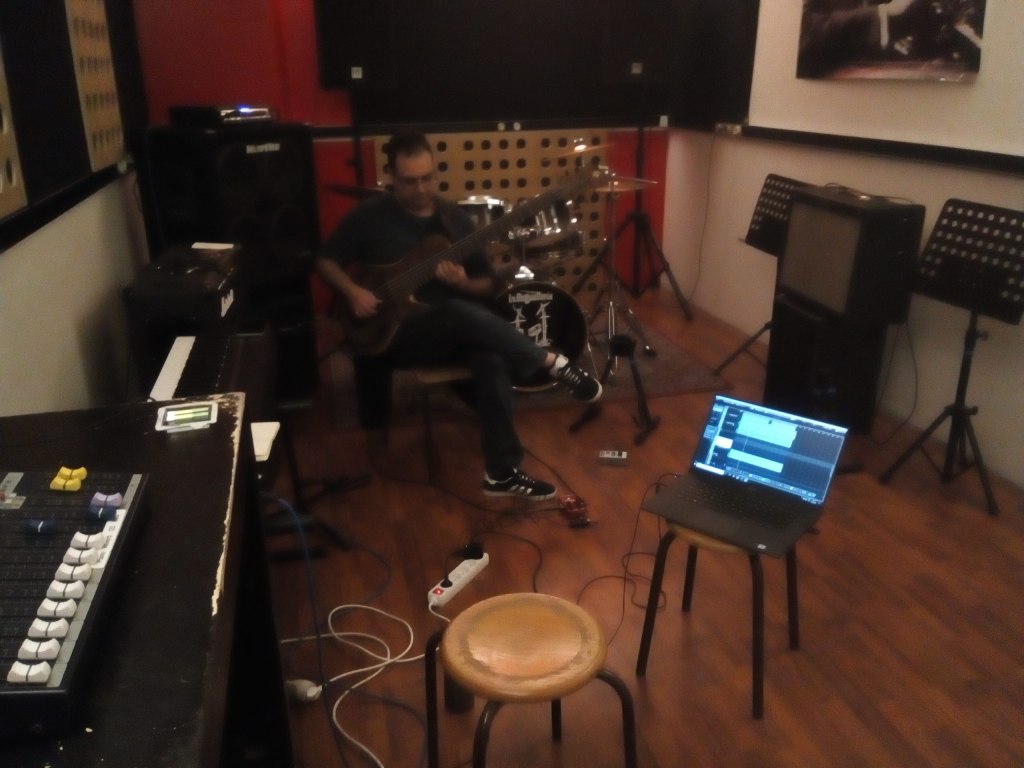
Years later I would find myself overdubbing these compositions with bassist Omar Harb in a studio in the vibrantly multicoloured 10th arrondissement of Paris. Suddenly I felt struck: here I was with a guy who actually came from one of the origins of that crisis, who had experienced the war firsthand, personally witnessing the destruction and tragedy of everyone and everything close to him, eventually having to flee his home across terrains and territories toward a more possible future. Yet here he was in front of me, playing the most beautiful and life-affirming music that seemed to know no crises, conflicts, borders, ideologies, territories – let alone any art projects, curatorioral practices and their momentary trends. This was simply life: this was why music existed.
Later that summer of 2021, when we were recording vocals with Ukrainian soprano Viktoriia Vitrenko at the Cité des arts in Paris, the war in Ukraine was yet to happen. In fact, the idea of a new war in the world would have seemed like the most ridiculous prospect back then, since wars belonged to the juvenile and less enlightened world of the past – and we lived in a civilized world of now…
Hope you’ll enjoy discovering the music X



 composer / sound artist / writer