A year inside new geographies

Happy new year!

As we transition into a new year and, hopefully, toward a more Earth-based world (colourful, dynamic, intelligent, creative, cooperative, egalitarian, disharmoniously peaceful), instead of some escapist ideological fantasy cloud bubble (wars, ecocide, climate breakdown, genocide, inequality, greed, capitalism, racism, post-truth), a couple of brief reflections related to my practice: 2024 has been the busiest and most productive year of my life to date.

A year of new cartographies, geographies, stories, possibilities, if you will.

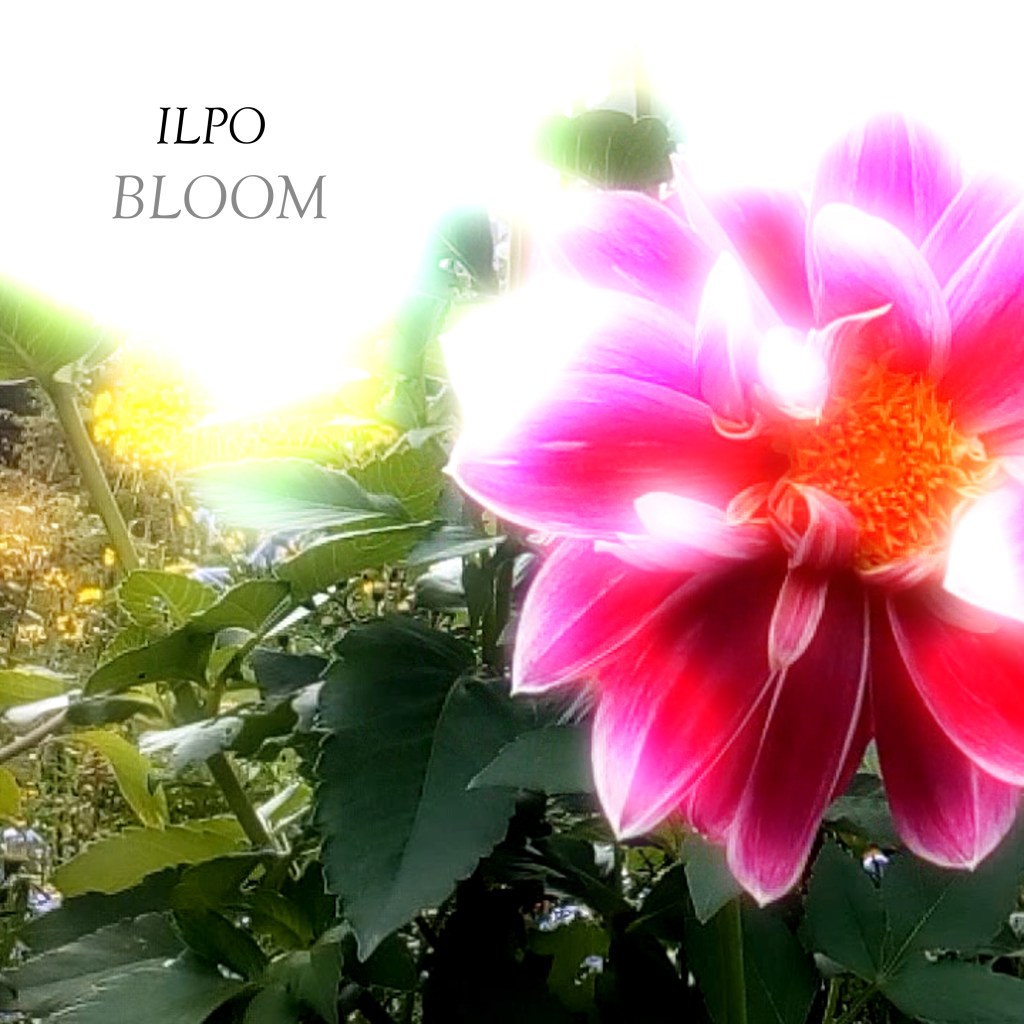
This year saw the release of two albums of mine, Bloom and Earth Variations. While Bloom emerged from the desire to hear a certain kind of “sensuous, tender, fragile electronica” that I felt was missing from the contemporary releases I kept coming across, it obviously represented a kind of beat-based electronic music I’d already left behind; Earth Variations, on the other hand, is something I’m very excited about and proud of: the result of a very long and arduous multi-year process, its every listen still keeps taking me to these novel landscapes, terrains, territories, geographies, stories, possibilities! To me, it’s such a unique global record (pity that the music media ignored it completely).

Fresh from finishing Earth Variations, I embarked on the most laborious yet most fulfilling and thrilling project to date: PIENIÄ TOSIASIOITA (‘small truths/facts’), a generative sound-poetry installation and composition, keeping me largely occupied for the rest of the year. Featuring nine contemporary poets from Jyväskylä FI, it was originally supposed to be “only” a site-specific installation at Taavettilan riihi, the oldest building in the Jyväskylä city area; yet it then found an afterlife as acousmatic performances at the Writers’ House and the City Library in Jyväskylä, eventually transforming into two contemporary dance performances at the Villa Rana cultural centre in the city, all thanks to the choreographer and dancer Saga Elgland as well as to the participating partners Keski-Suomen Tanssin Keskus ry, Keski-Suomen Kirjailijat ry and Kulttuuritalo Villa Rana.

Regarding all the work I’ve ever done, I’m most proud of this one. PIENIÄ TOSIASIOITA presents a kind of musical future I’m yet to hear elsewhere and which I’d like to most explore from now on. Its combination of generative (self-organizing and -evolving) poetry, voices (spoken word) of the poets, and the music made of transformed environmental sounds, creates a very unique and immersive experience that exists between spoken word, opera, field recording (environment) and ambient music. “Meditative opera”, as some listeners commented. I want to make this a more multilingual and multicultural experience in the future.

Amid developing the infinitely playing PIENIÄ TOSIASIOITA, I spent two months at the wonderful KulttuuriKauppila artist residency in Ii FI, creating a new 20-minute site-specific composition and performance titled SIINTO (‘shimmer’, ‘dawn’, ‘reflection’ or ‘glow’): it’s made mostly of the environmental sounds recorded around Ii, the voice of a dear friend born in Ii, and processed recordings of Ginette, originally performed by Petteri Mäkiniemi. It’s the most demanding piece I’ve ever had to prepare, with so many contrasting layers having to come together. After its successful performance as part of the Evenings of Art & Culture in Ii in August, I thought I could forget all about it: it has now become the basis of my next album Siinto, out next year!

My another long-term album Radiant City is also slowly falling into place, out next year.

The beautifully frozen Winter (-42 C) and sunny Spring at the refreshingly quiet and isolated Frosterus artist residency in Kärsämäki FI saw me applying for the docARTES doctoral studies in music and sound art at Leiden University NL and Orpheus Instituut, Ghent BE. And here I am, successfully lamenting about the drizzly and downcast Belgian winter! Where the f*ck is the sun?! (+-0) Once here, we were told that getting into the docARTES programme was the hardest part, now things should be getting clearer and sunnier.

Due to the programme, I had to cancel a very exciting artist residency in Amman and Wadi Rum, Jordan, this autumn, courtesy of Remal Lab/Studio 8 (Israel committing genocide and other war crimes in the neighbouring Palestine was also one troubling factor). I hope to attend the residency in the coming years when my study schedule allows and the current Israeli government is rotting in jail/hell.

Toward a new, hopefully more colourful, dynamic and civilised world!
Bloom out now

My new album Bloom is out now.

This initial Bandcamp release will be followed by all the other streaming platforms (including the thieving Spotify) later on.

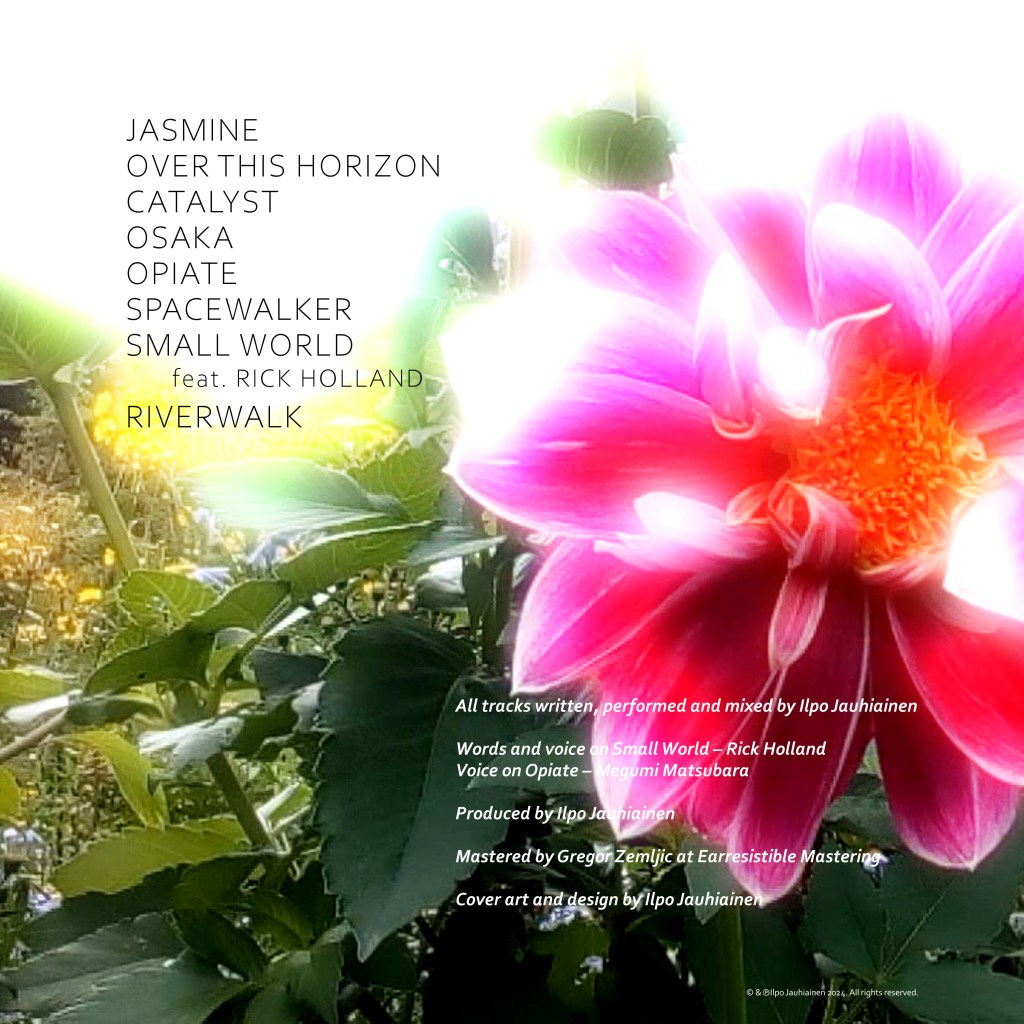
The album features eight tracks of my older electronica works – electronic poems and vignettes, if you like – most of them outtakes or alternative versions from my previous albums.

The tracks span the years 2001-2014, and they have been recorded in London, Tokyo, Berlin, Helsinki and Barcelona. The album also features a previously unreleased track from my earlier collaboration with poet Rick Holland.

Naturally there’d have been hundreds of more tracks to include from that period, but I’ve always felt that these eight particular pieces condensed the idea I was now after: that of fragility, subtlety, tenderness and sensuousness in electronic music.

At the same time, Bloom feels like a swan song to the kind of electronic music I’d been making since that summer of 1993 and all the way until 2020: my interest in beat-driven electronica with synths and drum machines has since evolved toward other forms of composition and musical possibilities.

As a listener, though, it’s a different story, and I still very much enjoy those synths and drum machines, melodies with inventive beats. Hence this modest, one last contribution to that world of future music.

“Our real power in this world is our ability to care, nurture, protect, share, create, cooperate, preserve, and love. Any other attempt at power is merely a form of cowardice, of unimaginative and inconceivable loss – pure illusion.”

Hope you’ll enjoy discovering it!

Shimmer and Bloom

An end of the year reflection.

This year I’ve received some truly heart-warming feedback about my debut album Shimmer & Bloom which came out seven years ago in November 2011. It’s always a life-affirming surprise when the ripples of your old work reach you after the years, to hear that the work still resonates to this day (considering the world was pretty much quiet when that album came out). This got me reflecting on the music and ideas between that first album and my newest one, Flash of the Spirit, which was released in November 2018, in particular since I feel the newest album represent a closure of a period begun by my debut.

Shimmer & Bloom was my first “official statement” of how the pop music and the world could be. After the album was released, I guess a lot of the interested people and fans expected me to continue building on the musical direction of that album: to continue becoming more pop, better and successful. One reviewer wrote: “Shimmer & Bloom is one of those albums that will continue growing for weeks and months after the first touch. Its surface seems calm at first but beneath the ethereally thin sound layers there is a lot going on that just isn’t revealed immediately. The main thread of this ambitious debut album tends to run away at times but on the whole Shimmer & Bloom is rewarding and beautiful”. This ambitious debut album…but towards what? Many didn’t know that the album represented a closure for me, of the music I’d been exploring, sketching and producing over the previous 15 years in my bedroom studios in Iisalmi, London, Helsinki and Berlin. The album was a statement for myself, to start taking my own musical interests more seriously and put an end to the endless sketching and experimentation (1). Shimmer & Bloom wasn’t a beginner’s discovery, it was me finally releasing what I’d already found, explored thoroughly and lived with for so long. And it was time to move on.

The next destination was Africa. My interest in Africa and its music goes all the way back to my childhood, to my earliest memory of making music: at the age of six I saw a documentary about a village somewhere in Africa, and its imagery and music fascinated me so much that I felt compelled to try and recreate the music and the atmosphere of the film with the electric organ at our home. I tweaked the organ’s setting in a “wrong” way until suddenly there it was: a pulsating, minimalist bass and organ motif mirroring what I’d just seen and heard. Few years later I discovered the hypnotic, minimalist mbira music of Stella Chiweshe from Zimbabwe, followed by lively, minimalist Pygmy music from Central Africa, and when I began to dabble more seriously with music production at the age of 14, these influences sought their way into the music (2). The fact that I’d never been to Africa became a fuel of imagination for a lot of the later music that I produced in my bedroom studios in London and Berlin: I wanted to create a new kind of sonic world inspired by Jon Hassell‘s Fourth World concept, the underground techno from Detroit, Warp‘s new electronica, David Byrne and Brian Eno‘s My Life in the Bush of Ghosts, dub music by African Headcharge, Fela Kuti‘s Afrobeat, and by countless of other influences. I kept reading Ocean of Sound by David Toop and More Brilliant Than The Sun by Kodwo Eshun while producing nearly a thousand of sketches, backing tracks and finished ideas. Most of them are now lost to broken and stolen technology.  

This “African electronic” thread was also present in our post-punk band l’ectro Q’d in London which operated between 2001 and 2004, as well as in the ethno-electronic ‘art pop’ music that I created and performed with artist Megumi Matsubara between 2004 and 2009, as Green & Ilpo.

My last bedroom studio in London (Dalston), 2004-05.

In the Spring 2011 I collaborated with the Nigerian-American painter Odili Donal Odita for our track Colourist, for a feature at Another Africa. The track was my reaction to Odita’s West African-influenced abstract geometric paintings, “the music I’d always wanted to see”. He was showing in the ARS 11 exhibition at Kiasma in Helsinki at the time, and in the same exhibition were two sound works by Nigerian artist Emeka Ogboh. Annoyed first by the sonic intrusion that Ogboh’s pieces created in the tranquillity of my solitary Helsinki walks (one of them was broadcasted outside Kiasma) and the simplicity of his presentation, I was moved by the incredible richness of his Lagos Soundscapes once I began to listen. I knew immediately that there was a whole new musical dimension embedded in these soundscapes: music that would emerge from the everyday life, be woven in the fabric of living like buying clothes at a jostling market or hustling for a medicine on a crowded bus. An ‘urban music’ created by a city itself.     

Finally I got to visit Africa: first in Senegal for the Dakar Biennale in 2012, then at an art residency in Benin for three months in 2013, during which I travelled also to Burkina Faso, Togo and Nigeria (where I met and stayed with Emeka Ogboh in Lagos, among others). These travels infected me with rhythm fever, joy and colours of life. The West African funk, afrobeat, highlife and gospel that I heard at this corner bar in Ouagadougou alone, through its dusty one-speaker soundsystem, changed me forever: the sound was so raw, distorted, full of soul that I felt flashes of spirits charging through me (could’ve been also flashes of pastis, not sure). I kept having epiphanies.

I rediscovered a new joy for making music, for being here, for this multitude of colours and cultures and shared possibilities that the Earth presents. 

This West African experience subsequently gave rise to the albums Arrival City, Sahara, LOS-HEL: Possible Cities (with Emeka Ogboh), Pulses / Radiance, and Flash of the Spirit.   

And now I feel that with the new album a certain chapter is closing. The period from Shimmer & Bloom to Flash of the Spirit has seen me refining, exploring and discovering my musical voice, my sound, and reason for making music. I call this my “pop period” even though the music can hardly be called pop. Pulses / Radiance aside, it’s characterized by short 3-minute melodic tracks, youthful experimentation, search for my place in music, and by my desire to please audiences (3); it’s also unified by the fact that most pieces on these albums were initiated during those innocent and productive “imaginary Africa” years in London and Berlin 1999-2010, when I dreamt of becoming a pop producer akin to Brian Eno, Timbaland or Quincy Jones (etc.). With Shimmer & Bloom I set out to see if I can actually finish a whole album of the music I believed in and present it proudly to the world. This was followed by the passion to create a new kind of music that would bridge my interests of the West African musics and the Western electronic music. And I feel I’ve achieved all that – apart from becoming Quincy Jones (Michael Jackson never called, bugger). Personally I found the pop music of the future world I’d like to inhabit.

I’m done with trying to be popular, trying to play safe, trying to prove my credentials. Been there, done that. From now on I’m just making music, crafting what I feel is the most exciting thing sonically, musically and culturally. I have found my voice: pop or experimental, African or European – I really don’t care. It’s just music, it’s just me. All I know is that I want to go deeper with what I’ve found.

1 And none of this might have happened if I hadn’t met with my dear London-era friend Lee in Berlin (where she now lives), when during our breakfast at Ankerklause she said that you never become an artist unless you finish and release your work, and take the responsibility for that.

2 Not as straightforward sounds or music but more in terms of rhythm, sensitivity and overall aesthetics: repetition, patterns and complexity through simplicity.

3 This is not to dismiss the seriousness, criticality, passion and commitment that I’ve invested in every track and album – I wouldn’t have released any of these if I didn’t think there was a worthwhile idea behind each of them.